Allowing teams to unlock complex product data insights through natural language
my role
Product strategy and design, working directly with the Product Owner to define the v1 scope and structure early GTM validation.
team
Product Designer (Me)
Product Owner
1 Frontend, 2 Backend, 1 QA
timeline
Q3 2025
(Pre-Seed)

problem context
Beyond basic dashboards, more complex analysis required technical and analytical expertise
Our mission at 5X is to make data truly accessible across the organization. Semantic layers, data apps, and BI tools improved structure and visibility. But meaningful analysis still depended on SQL and deep schema knowledge.
They standardized access.
They didn’t democratize understanding.
solution
With AI, the gap could finally be closed by translating ambiguous business questions into structured queries through conversation.
No SQL
No manual dashboard setup
Reduces dependency on technical teams
before investing in engineering
Building product baseline using Figma Make prototype, instead of relying on internal demos



Before writing production code, we prototyped Conversational AI in Figma Make using the OpenAI API and real datasets, and shared it with customer-facing and sales teams within 5X.
The goal was to assess purchase interest and define a clear product baseline before investing in engineering. We measured engagement depth, follow-up requests, and willingness to move toward a pilot.
early interest (pre-launch)
Existing customers enrolled in beta via Customer Success
New customers onboarded through sales-led conversations
Founder & VC engagements via pitch calls
pillars of the solution
The key principle is to design Conversations as a discovery tool, not just a query box
When working with data, trust is non-negotiable!
In early pilots, we observed not just feedback, but hesitation and uncertainty even when answers were correct. These pillars emerged from that insight.
observations from prototype
Most prompts expressed intent, not queries
Blank input fields left users unsure of what their data could do
final designs
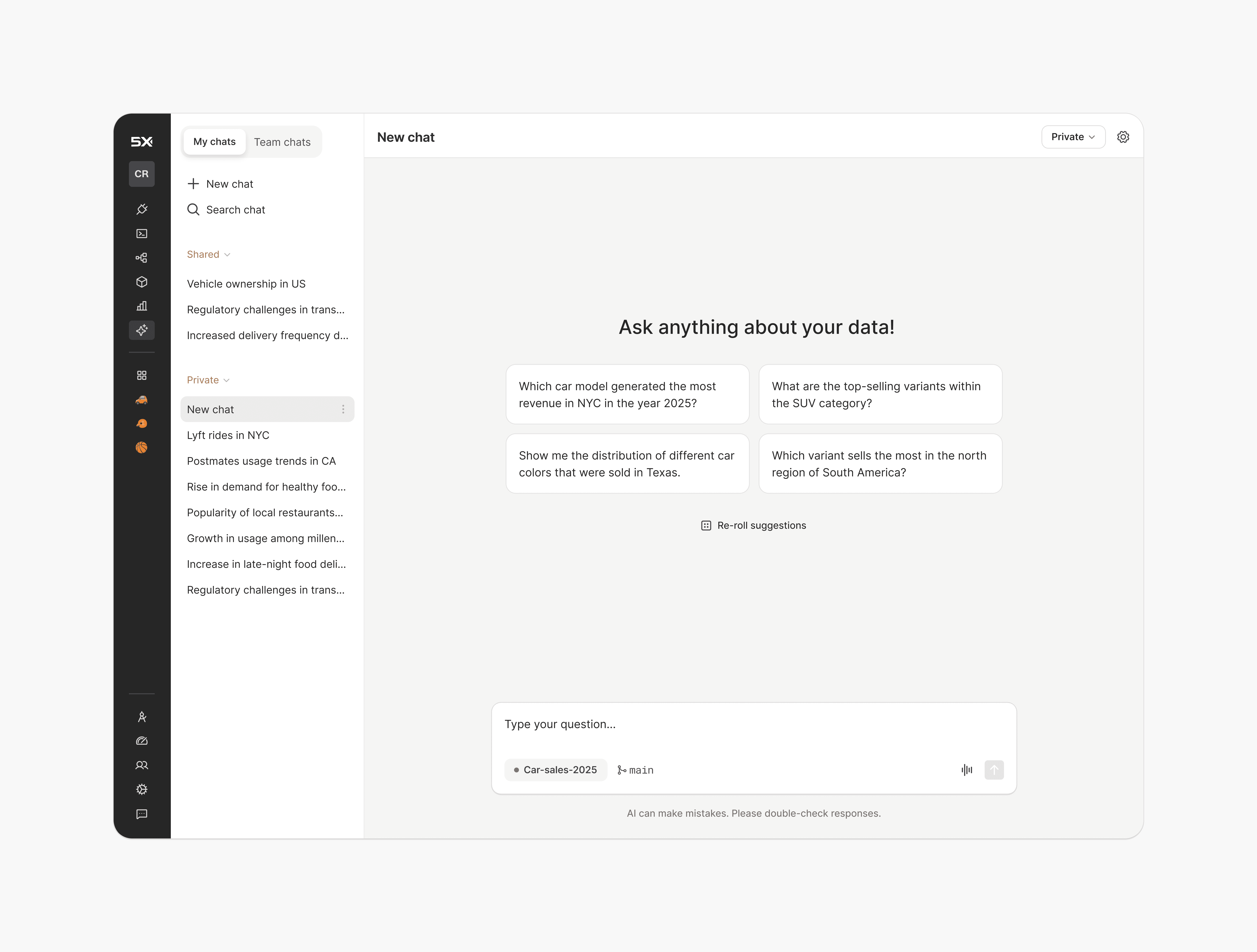
Introducing Conversational AI
Ask anything about your data based on the selected semantic repository
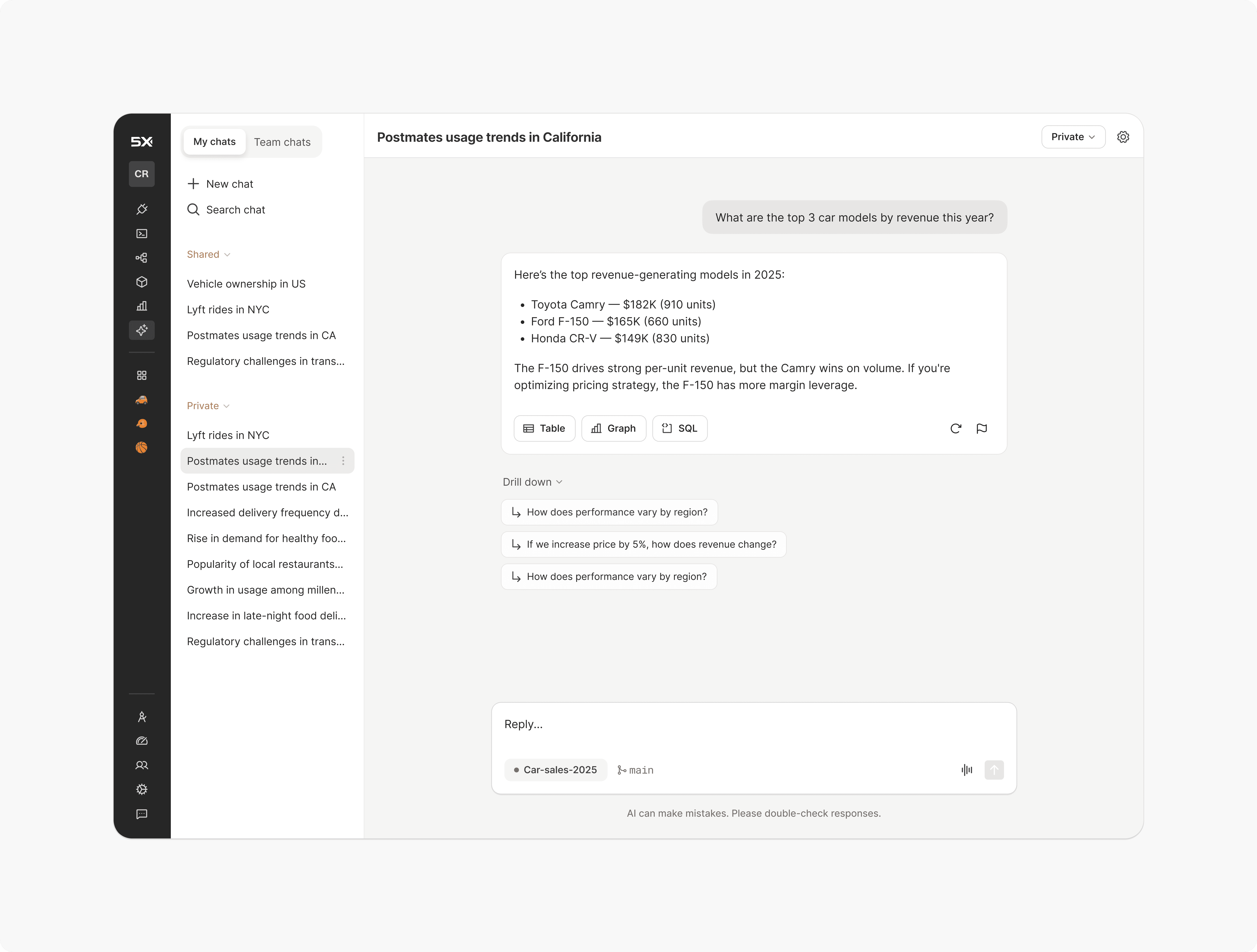
Each answer is a query, so the table, graph, or SQL can be extracted at the chat level
Every drill-down question surfaces a new discovery
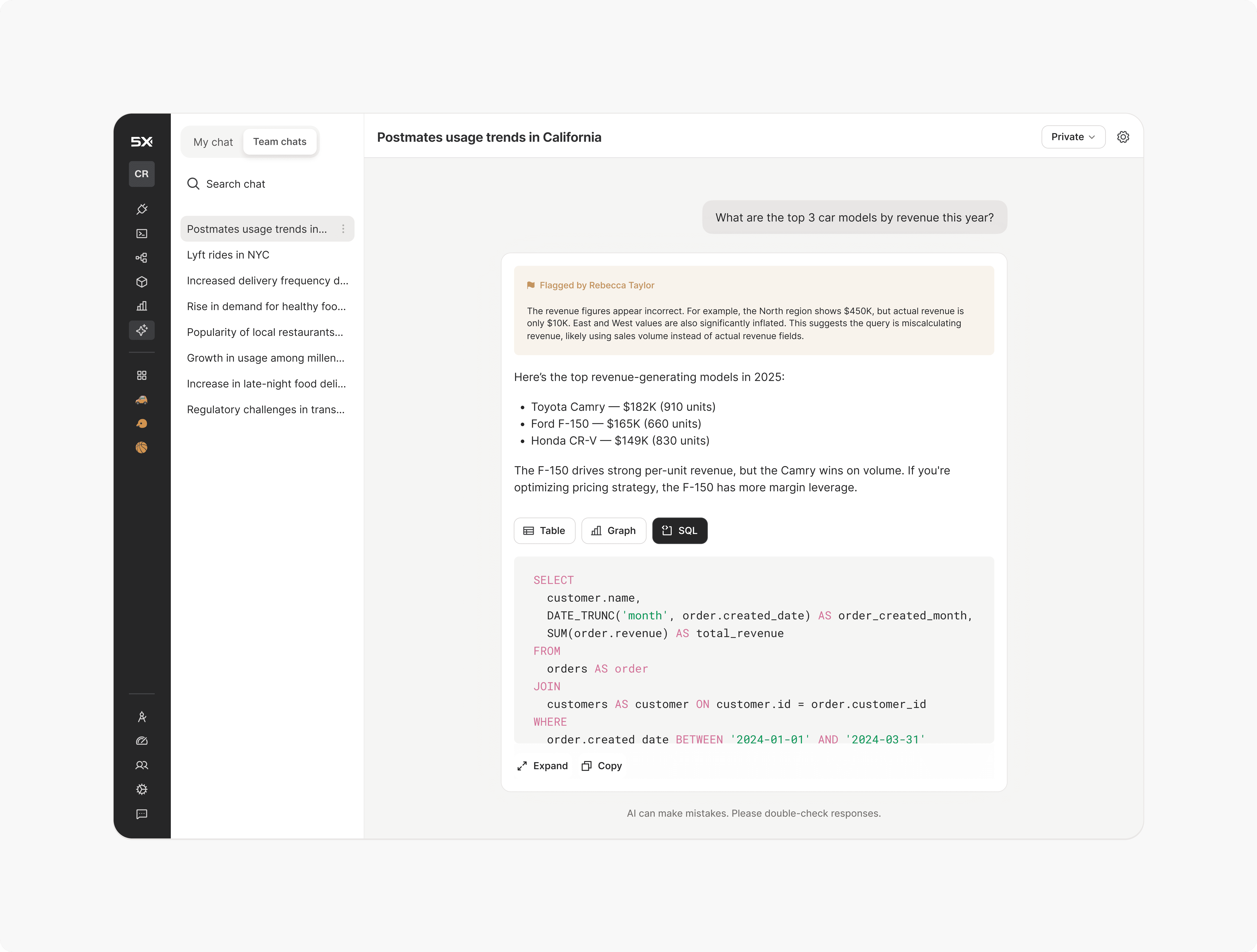
RBAC and flagging controls for workspace visibility, keeping humans in the loop
Different thinking state for better transparency
The main challenge was that the API didn't return messages at every step, so I collaborated with devs to build a custom event system in the code to work around it
Chat experience
Breakthroughs happen within the same chat, so each bubble is its own query rather than part of a conversation!
Table, graph, or SQL can be extracted at the chat level based on the needs
Easy movement between previous chats and drill-down questions, always allowing to come back and explore more
Role-based access control (RBAC)
Chat-level sharing keeps insights accessible across the workspace for better team decisions
Direct control over workspace visibility at the chat level
Private and shared chats in separate sections
Human in loop
Flag the chat for admin or data team support when not satisfied with an answer
Chat-level flagging
Once flagged, the admin will review the flagged chat
Want to know more? Get in touch to request the case study.